

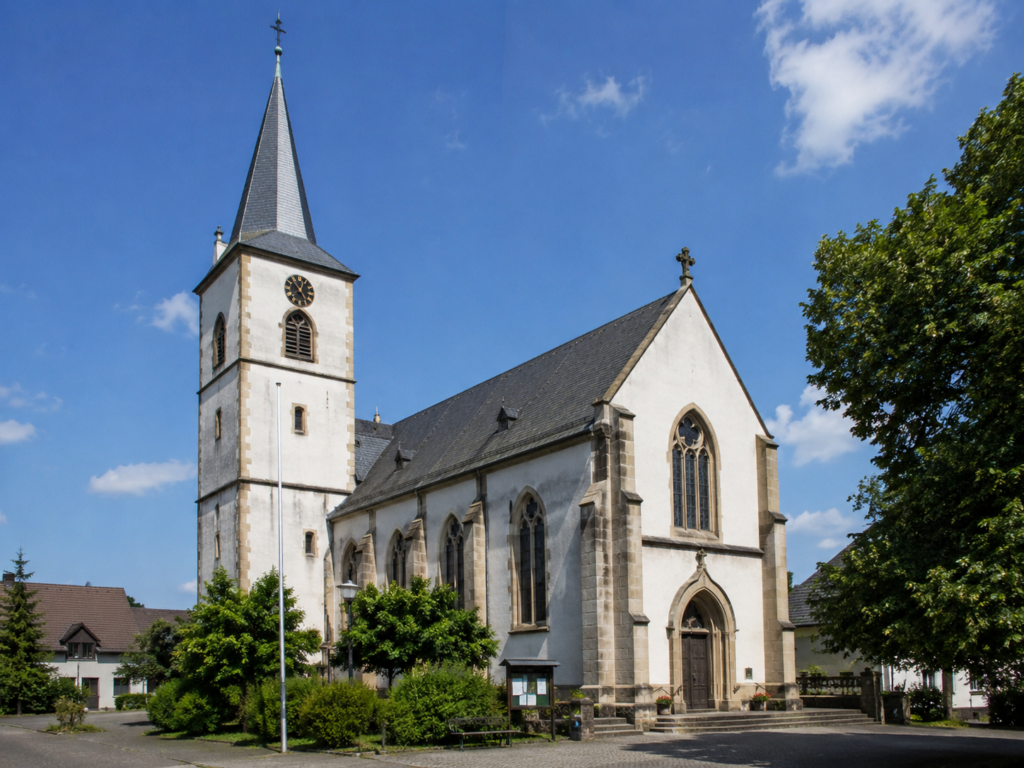
Churches, chapels, parsonages, and community centers belong to the rarest valuation objects – and the most difficult. Declining membership numbers and tight church budgets are leading to an increasing number of religious buildings being deconsecrated, sold, or repurposed. This raises a question for which there is no standard procedure: What is the market value of a church building?
The fundamental problem: There is no functioning market for a church and practically no comparable prices. Its market value therefore cannot be derived directly, but only via the detour of cost approach, conversion potential, and land value – secured by a careful market adjustment.
Why the sales comparison approach is ruled out
The market value according to § 194 BauGB is the price achievable in ordinary business transactions. For residential and commercial buildings, it can be derived from price collections. For religious buildings, this data basis is completely lacking: there are too few sales, and every object is a unique property. The sales comparison approach is therefore not applicable. A classic income approach is only viable if sustainable yields – such as from conversion into event, residential, or office space – can actually be achieved.
The route via the cost approach
As a rule, the cost approach forms the starting point: The land value of the property and the reproduction costs of the building are determined, reduced by depreciation due to age and structural defects. However, with historic building substance, this calculation method quickly leads to values that no longer have anything to do with a real purchase price – an elaborately constructed religious building has high calculated reproduction costs, but hardly any demand.
The decisive factor is therefore the market adjustment: The preliminary cost value is adjusted to the actual market level using a cost value factor. For special properties with no demand, this factor can be very low. In some cases, the property is even valued with a negative contribution of the existing building structure, because demolition and securing costs exceed the possible proceeds.
Conversion potential as the actual value driver
For most deconsecrated churches, the value lies not in the building itself, but in what it can become. The valuation must therefore examine the realistic conversion potential :
- What uses are permitted by planning law (development plan, § 34 BauGB, surrounding development)?
- Are residential, columbarium, cultural, event, or office uses structurally and economically feasible?
- What conversion costs arise – and how significant is the backlog of maintenance?
Only this analysis reveals whether a sustainable income value exists or whether ultimately the Liquidation Value of the land, less site clearance costs, determines the market value.
Heritage Protection: Value Driver and Value Restraint Simultaneously
Virtually every historic church building is subject to heritage protection. This has a dual effect: On the one hand, heritage protection regulations significantly restrict alternative uses, increase renovation costs, and limit demolition or expansion – thereby reducing value. On the other hand, increased depreciation allowances under §§ 7i, 10f EStG (German Income Tax Act) and potential funding opportunities create financial flexibility, and the distinctive architectural character can establish independent value in suitable locations. The market value depends on which factor prevails in the individual case.
Ecclesiastical Legal Particularities
Prior to a sale, the secularisation (profanation) by the competent ecclesiastical authority is typically required; without it, economic alternative use is not possible. Churches often also retain influence over subsequent use through reversion clauses, usage restrictions, or heritage conservation agreements. Such encumbrances are value-relevant and must be included in the appraisal report.
Conclusion
The market value of a church building cannot be derived from the market but must be deduced from the building substance, the land, and realistic alternative use potential. A reliable appraisal report combines the cost approach with a pragmatic analysis of alternative use and planning law, and clarifies transparently whether the building substance supports value or whether the land value is decisive.
The Real Estate Valuer office STRECKEL appraises religious properties and special-purpose assets – for parishes, foundations, municipalities, and private buyers. Book a non-binding consultation now.
⚖ Legal Framework
Planungs- und denkmalrechtliche Angaben wurden zum Veröffentlichungszeitpunkt geprüft; maßgeblich ist das jeweils aktuelle Landesrecht und die Entscheidung der zuständigen Behörden.